Perimenopause Fatigue and Brain Fog at Work: What Helps
Perimenopause fatigue and brain fog at work are not a…


As a confidence coach and perimenopausal woman, I am still aghast at how much work I’ve had to do to consider myself confident in who I am!
Let’s be honest: most of us weren’t raised to be confident. We were raised to be careful.
Careful not to speak too loud. Careful not to take up too much space. Careful not to make others uncomfortable with our ambition, our truth, our brilliance.
So when confidence feels shaky, it’s not a personal failing. It’s a natural response to a culture that hasn’t always been rooting for us.
This is where coaching comes in. Not as a fix, but as a reminder of who you are when you aren’t shrinking.

A confidence coach helps you remember who you were before the world told you who to be.
This isn’t about shouting affirmations into a mirror or faking it until you make it. It’s about gently unlearning the layers of self-doubt, perfectionism and fear that have kept you playing small, and then choosing something different.
With a confidence coach, you’ll:
This work is not performance. It’s deep reclamation.
Real confidence isn’t certainty. It’s the willingness to act while you are still unsure, and that is a skill rather than a personality type you were either born with or missed out on.
A general life coach works across whatever you bring: career, health, relationships, direction. A confidence coach will specialise in one thing, which is the belief underneath all of those.
In practice, a confidence coach might spend a whole session on a single sentence you said in passing, because that sentence is a limiting belief you have been treating as a fact for twenty years.
The work is to surface those limiting beliefs, test them, and replace them with something truer. That is how you overcome self-doubt rather than simply working around it.
Confidence is a skill. It builds with practice, which means your confidence levels are not fixed and neither is your self-worth.
For generations, confidence wasn’t something we were taught to cultivate. It was something we were subtly encouraged to suppress.
Many of us reach a point where we think, is this it? Is this all there is? That moment of questioning isn’t a breakdown. It’s the beginning of your awakening.
Coaching like this supports women through those pivotal life transitions, especially around perimenopause, motherhood, career change, or simply feeling lost after years of putting others first. If exhaustion and fog are part of it, we go deeper in perimenopause fatigue and brain fog at work.
Because confidence is not about being certain. It’s about being connected, to your body, your boundaries, your brilliance.
If the mood shifts are the loudest part for you, read perimenopause mood swings first.
Imposter syndrome deserves a mention here, because it is so often what brings women to coaching in the first place. Low self-esteem at work rarely looks like low self-esteem. It looks like over-preparing, over-apologising and never quite believing the good feedback.
Whether you work with a female empowerment coach, a transformational coach or a mindset coach for women, the right support changes everything. A great coach will personalise the work to your life rather than running you through a template.
The aim is personal growth you can feel in both your personal and professional life, and self-belief that holds up on the hard days as well as the good ones.
If any of this resonates, it could be your next brave step.

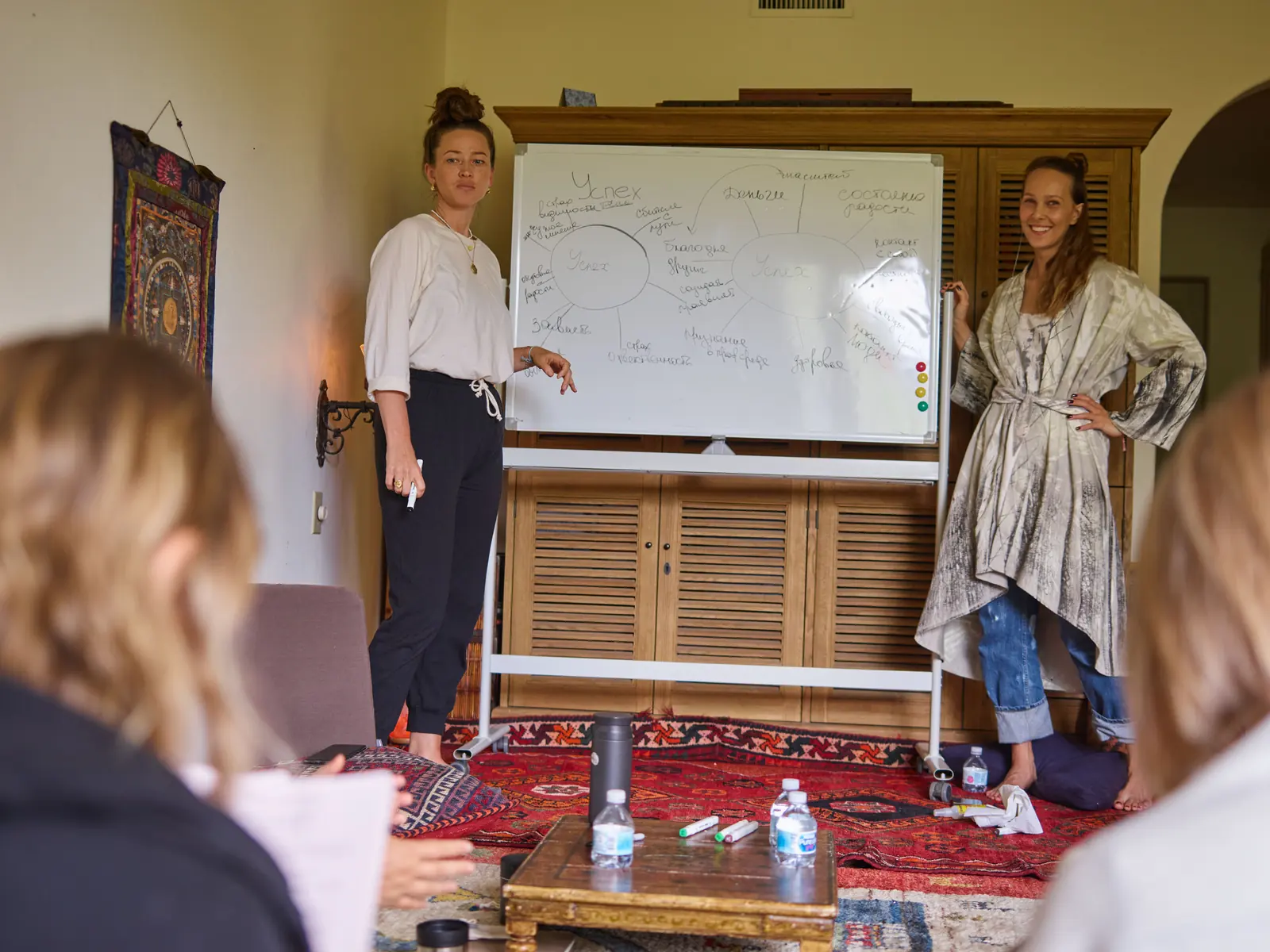
Every session is different because every woman is different. But here’s what you can typically expect from coaching sessions with us:
It’s a space where nothing about you needs fixing. Only understanding, honouring and nurturing.
A single session can be life-changing, but the real shift is confidence over time. That is why our coaching programme is built around practice rather than a one-off burst of motivation.
Therapy often helps you look back and heal what’s unresolved. Coaching helps you look forward, and walk boldly into what’s possible.
| Therapy | Coaching | |
|---|---|---|
| Direction of travel | Looks back to heal what is unresolved | Looks forward to what is possible |
| Central question | Why do I do this? | What do I want, and what is the next step? |
| Typical focus | Healing, diagnosis, past experience | Self-belief, boundaries, action |
| What you leave with | Understanding and relief | Practical tools and something to practise |
| Best when | You are carrying something unresolved or distressing | You know what you want and cannot get out of your own way |
They’re different, but beautifully complementary. Where therapy might help you unpack the root of your people-pleasing, coaching will help you practise saying no and holding it.
Plenty of women do both at once, and a good coach will tell you honestly when what you need is a therapist instead. Our co-founder describes her own version of this in the framework that rebuilt her confidence.
A confidence coach helps you identify the beliefs holding you back, then builds practical habits that replace them. Expect questions rather than advice, and homework rather than pep talks.
The job is not to make you feel good for an hour. It is to help you build lasting confidence you can still access on a Tuesday morning when nobody is cheering.
It varies enormously with format and experience, so treat any single figure you see online with caution. Group coaching is the most affordable way in, and one-to-one work with an experienced coach costs considerably more.
We would rather talk to you about what you need than quote a number into the void, so the honest answer is to ask us.

That depends entirely on whether you do the work between sessions, which is the part nobody advertises.
If you want someone to hand you confidence, no coach is worth it. If you want a structure, an accountable relationship and tools that compound, it is one of the better investments you can make in your personal development.
Look for an accredited training route, ideally ICF recognised, and expect it to take real time. Both of us trained properly and still supervise our practice.
The coaching experience that matters most, though, is your own. The best coaches have done the work themselves.
At EmpowerHer, we believe perimenopause isn’t a time to disappear. It’s a time to re-emerge.
This work can help you navigate the transition with clarity and courage, turning self-doubt into self-trust, and uncertainty into action. It is how you unlock the version of yourself who has been waiting behind the caution.
You’re not too late. You’re right on time.
Curious what confidence coaching could look like for you? Explore how group coaching works and start your journey toward unapologetic self-trust, or come and join us on the Perimenopause Confidence Retreat.
Because your power never left. It’s just waiting for you to claim it.
Because your brilliance never pauses, Amy xx