
Confidence Coaching for Women: Reclaiming the Power That Was Always Yours
What a confidence coach for women really does, what happens…


I first started to notice menopause symptoms, known as perimenopause, when I was 51.
Like many women facing this life stage I felt isolated and alone, and lacking a comprehensive understanding of the symptoms.
Like a growing number of women, I was facing it at the same time as working professionally and juggling caring for children and parents.
Having got through what I considered at the time to be far worse situations in my life, I thought “it’s fine, it’s just a phase, I’ll be ok”.
But then people started to notice the changes in my energy and normal joie de vivre, and not least of all my performance at work.

If this sounds familiar and you’re feeling stuck, then I want to assure you there are many different ways that can help you move forward. I’m going to share some of the things that worked for me, bearing in mind we’re all individuals and different things work for everyone.
I also want to encourage and support anyone reading this to consider options that might not initially appeal to you.
Because the first thing that worked for me with GREAT effect was something I’d initially rejected for around 3 months before trying it, and I want to share with you how much I wish I’d started it earlier. It’s the first one on my list.
Before the six things, it helps to know what I was working against:
None of this is a character flaw and none of it is permanent. It took me far too long to recognise that what I was experiencing was menopause-related rather than a personal failing.
Low confidence around menopause has a cause. Hormonal change is what causes loss of confidence for so many of us, and naming that was the beginning of getting my sense of self back.
What follows is not professional medical advice. It is what worked for one woman, written down in case it helps you, and self-doubt is a normal part of the picture rather than a sign you are doing it wrong.
Because I’d been feeling so low and literally lifeless, which is the opposite of how I normally am, I couldn’t even bring myself to pick up a journal, let alone think about writing in it. Everything felt so overwhelming at that point.
You might be surprised to learn it was my male partner who convinced me of the benefits and handed me a simple starter journal.
It had 3 statements with space to write underneath each day. The first one was ‘Three things you’re grateful for today’.
When I eventually tried it out, I read that line and literally broke down in tears, and continued crying while I was writing.
I truly believe that was another prompt that helped me realise I wasn’t alone, and was my first small step out of despair.
Once I started opening up to my friends about how I was feeling, it turned out we were all experiencing or had experienced the same thing, so I started to feel less alone.
I realised it was something we could share and even laugh about at times.
I also include my partner and children in this support community. The more I learnt, the more I shared with them, and being teenagers I wanted to make sure my kids also had awareness about what was happening.
There are also people who impacted me without them even knowing it, like the dog walking community in my local park, just by being a constant uplifting presence in my daily routine.
Having people around me who understood and didn’t judge or minimise how I was feeling made a big difference to my state of mind.
Sharing experiences with others is the fastest way I know to reduce isolation, and it is why my co-founder Amy wrote about perimenopause mood swings as a turning point rather than a crisis. It also made me feel more comfortable saying out loud that I was feeling low.
Although I’d always been someone who regularly exercises, when I was at my lowest point I couldn’t find the motivation and stopped my usual routine.

Walking my dogs every morning was non negotiable (on their part!) and was also what held the space for me to keep moving.
Once I started to feel better in myself, from the gratitude journaling and community, I was able to gradually get back to a bit of yoga.
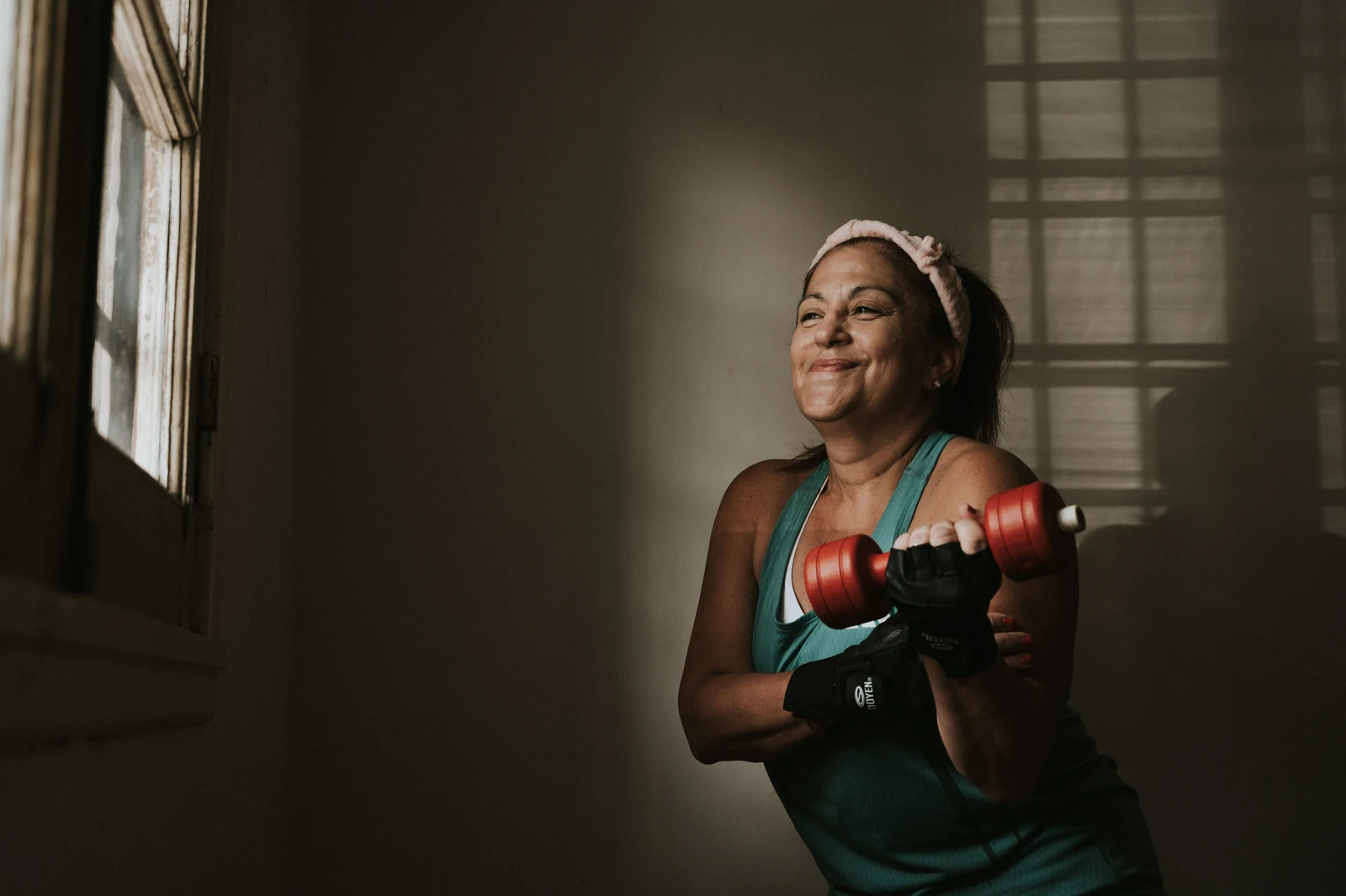
But the real game changer was strength training. When I say this, I mean using bands and light weights at first, just enough to make me feel like my body was working.
I read and listened to so much about the importance of strength training in peri/menopause and beyond that I finally realised it was at least worth a try. A balanced diet helped too, though I will not pretend that was the hard part.
What I didn’t expect was the energy boost I got from it! Absolute game changer!
It’s something I’ve embedded in my routine now, and even though there are (many) times when I don’t feel like it, remembering the buzz I get afterwards is enough to motivate me.
Regular exercise turned out to be non negotiable for me. So did learning to prioritise activities that bring me energy rather than drain it.
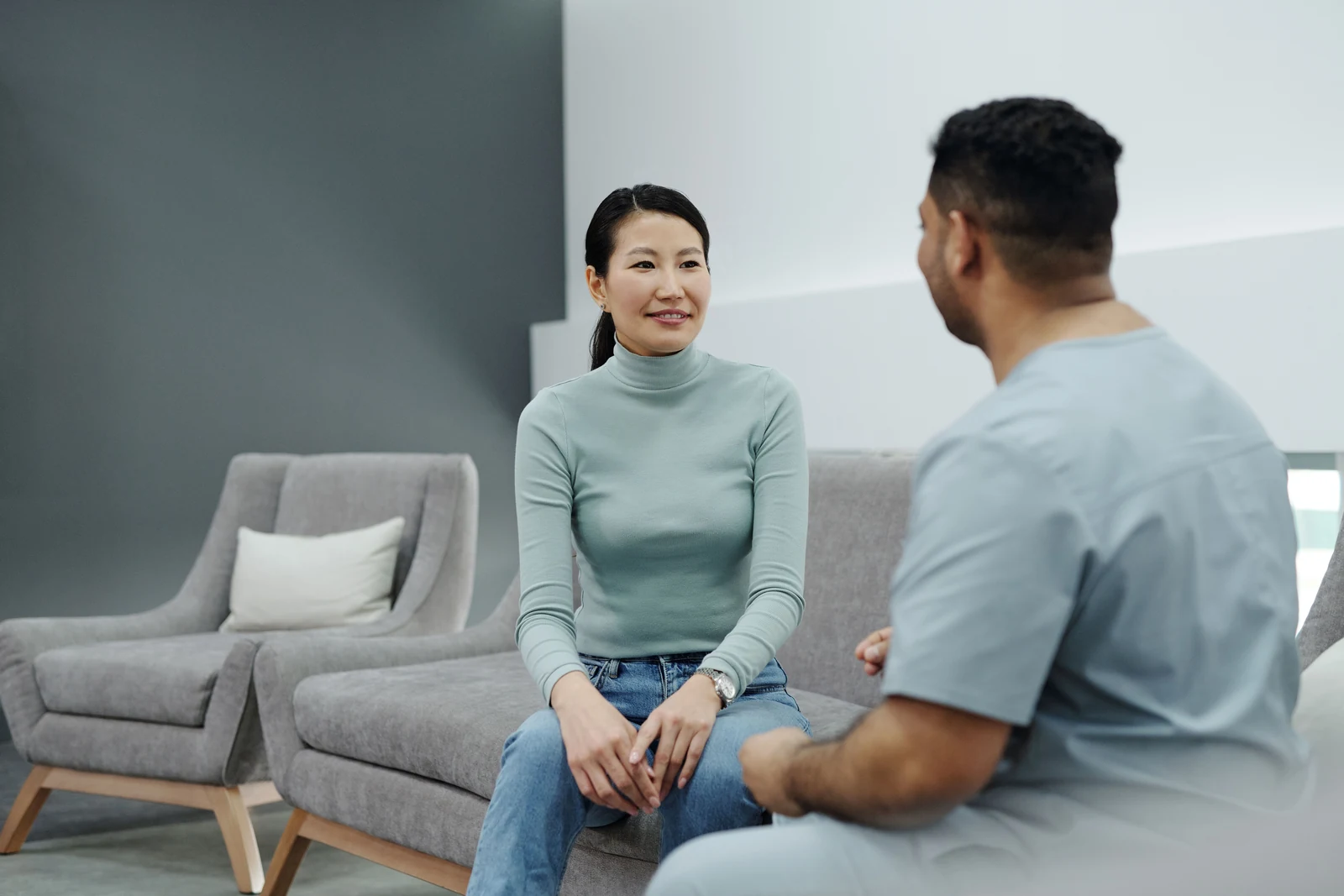
I now realise I’m extremely lucky that my local surgery has a fantastic female GP who is super switched on about all of this and will take time to listen and advise.
Having her support has meant everything to help me make decisions about my emotional and physical health, and what options were available and right for me, including hormone replacement therapy.
It seems not much stays the same at this stage, and so knowing that she is there to help me as my needs change means so much.
Although this was more forced on me than voluntary, due to the impact of peri/menopause at work, as is often the case it turned out to be the best thing that could have happened.
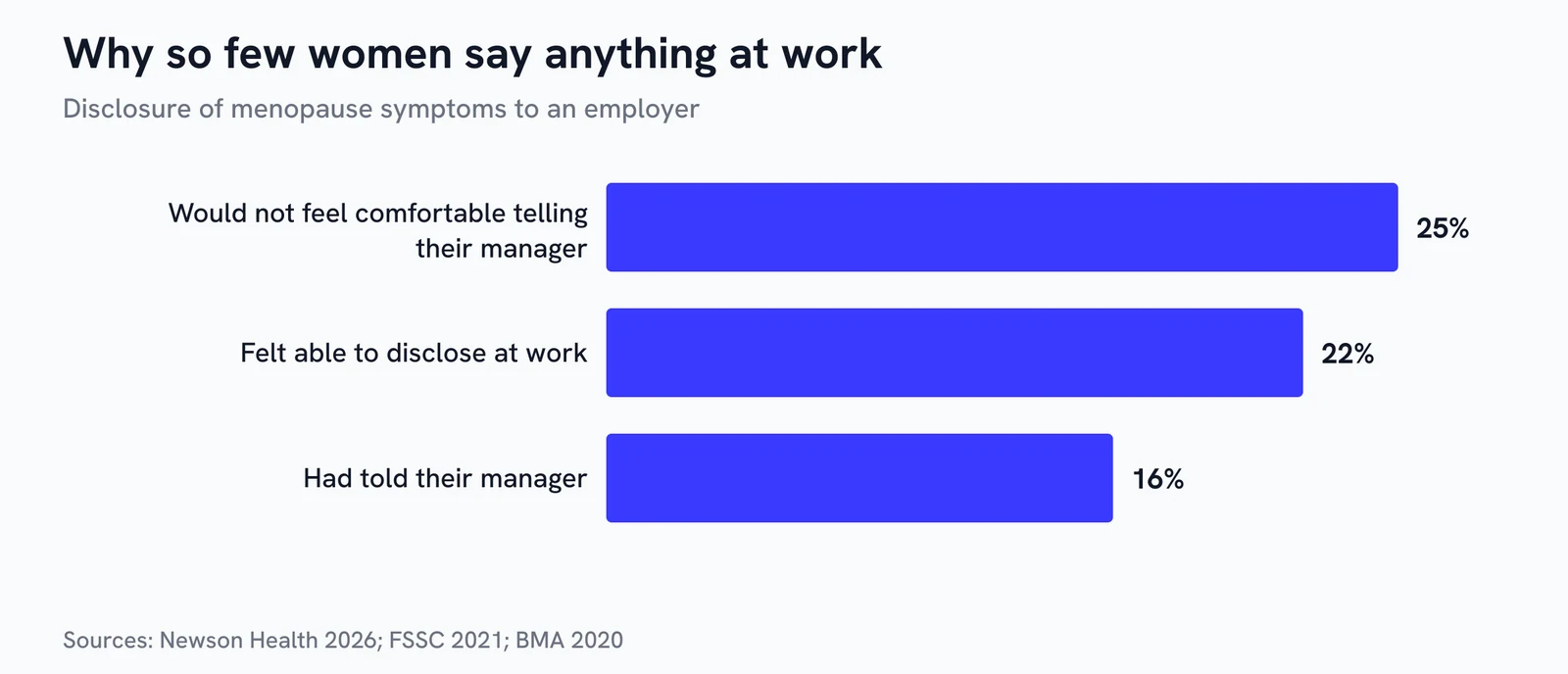
My performance was suffering terribly at the start, before I got emotional and medical support, and I didn’t feel able to either discuss this openly with my manager or take the sick leave that was offered.
Being a child of the 70’s I felt it wasn’t something I was comfortable with, and at that time nobody was talking positively about the impact of any of it at work.
I used to think that was just me being private. It turns out it is almost everyone.
Eventually I was offered a way out, but it damaged my self-esteem and had a huge impact on my identity as a successful professional woman. This took a long time to rebuild.
This was when I realised that what underpins all of it is confidence, and that’s what I’d lost, in droves.
Because of the new mode my brain was operating in, I became overwhelmed and anxious much more than ever before, and far more easily.
By paying attention daily, eventually I was able to identify some of the things that were causing the overwhelm, and realised that after years of coaching others on boundaries, it was time for me to walk the talk!
My brain was finding it increasingly hard to cope with juggling all my professional commitments along with personal ones, and I needed to put them in protected boxes so I was only focusing on one at a time.
In reality what this meant was, quick win, leaving my phone in another room when I was working, so as not to get distracted and overwhelmed with messages that weren’t relevant at that time nor needed an immediate response.
The next was to communicate to my business partner about what was happening to me, which is super important, and obviously being the amazing friend and coach that she is, she completely understood when I explained my need to ring fence different times for different areas of my life.
We set up a new system for our comms that fully respects each other’s time when we need to be focussed on other projects.
People often ask me which one made the difference. Honestly, it was the order rather than any single item.
| What I tried | Why I resisted it | What changed |
|---|---|---|
| Gratitude journaling | Too low to pick up a pen. I rejected it for three months | My first small step out of despair |
| Community | Saying it out loud felt like admitting failure | Finding out my friends were all experiencing the same thing |
| Strength training | I had stopped exercising altogether | An energy boost I genuinely did not see coming |
| A GP who understands all this | I assumed I would be dismissed | Real choices about HRT and my physical health |
| Changing my role | It was forced on me, not chosen | Painful, then the best thing that could have happened |
| Boundary setting | I coached others on it and never applied it to myself | One thing at a time, and the overwhelm dropped |
As a result of putting these things in place, they became steps to rebuilding my identity and self-belief. But there was also a central piece critical to the success of all this.
Confidence. Oh yes.
Again, walking the talk and remembering everything that myself and my brilliant co-founder and coach Amy know about this was, and still is, fundamental to how I carry myself through peri/menopause.
Self practice helped me heal my wounded confidence, always remembering confidence is a thought process and can be changed.
Because hormones and the brain influence everything from brain development and function to behaviour and mood, self image and self-confidence are all based upon thought processes and self-talk inside our minds.
This is the heart of confidence coaching for women. If that sounds like cognitive behavioural therapy, it is a close cousin. CBT and other talking therapies work on the same principle: catch the thought, test it, and reframe it. You do not need a diagnosis to use the technique.
Confidence and self-esteem are not fixed traits. Boosting your self-esteem during menopause is a daily practice, not a personality transplant.
Learning how to influence this was transformational, and the key towards my healing was understanding that daily practice worked.
By not doing it alone, which is the honest answer. Community, one daily practice you can keep up on a bad day, and someone medical who takes you seriously.
The women I see struggle most are the ones trying to white-knuckle their way through in private, which is exactly what I did for the first year.
Most commonly in the mid-40s, though it can start in the late 30s and, as in my case, be spotted much later. I was 51 before I understood what was happening.
Symptoms often begin years before periods stop, which is why so many women put them down to stress instead.
Fluctuating hormones affect the brain chemistry behind drive and reward, so motivation genuinely does get harder rather than you getting lazier.
Add broken sleep, low mood and feeling low about yourself, and the gap between wanting to do something and starting it grows. That gap is the thing to design around, not to feel ashamed of.
Yes. Mine did, and research consistently finds women report high confidence in the years after.
Getting your confidence back is not about waiting it out though. It is a practice, and it can start while you are still in the thick of it.
If you want to know more about menopause and the brain, I highly recommend The Menopause Brain by Dr Lisa Mosconi. It helps to understand how hormones and the brain are interconnected, what happens to the brain during the menopause transition that affects EVERYTHING, and what to do about it.
If you’d like to know more about using confidence to manage peri/menopause and help you in every part of your life, then please get in touch. We’d love to hear from you.
If you suspect ADHD is in the mix, read ADHD and perimenopause symptoms in women.
Or come and see how group coaching works.
By Jo Ellicott, Co-Founder EmpowerHer
