
Perimenopause Rage: Why It Happens and What Helps
Perimenopause rage is real, and it is not who you…


Perimenopause often enters our lives like a whisper, until it roars.
The symptoms, mood swings, hot flushes, sleepless nights and brain fog, can feel disorienting and overwhelming. But what if this wasn’t a crisis, but a call? A powerful, necessary invitation to reclaim your energy, purpose and voice?
At EmpowerHer, we believe perimenopause is not the end of something. It’s the spark of something extraordinary.
This phase is a reckoning, a chance to redefine how you live, work and show up in the world. In this blog we’ll explore how it can be a powerful turning point, emotionally, physically and professionally.
Before the reframe, the mechanism. Because knowing why is what stops you blaming yourself.
At this stage, oestrogen and progesterone levels fluctuate, and testosterone declines too. Those hormone changes are not just reproductive. Oestrogen plays a role in mood by supporting serotonin and dopamine, the chemistry behind steadiness and motivation.
So when hormone levels swing, so does your mood. Perimenopausal mood is not a character flaw appearing in your forties. They are your brain function responding to a moving target.
Most menopausal women experience mood shifts of some kind, including low mood, irritability and anxiety. Perimenopause symptoms are not only physical, and menopause and mood are far more tightly linked than most of us were ever told.
Menopausal symptoms rarely arrive one at a time, and three things in particular make mood worse. They compound:
That rollercoaster can trigger symptoms like:
If ADHD is also part of your picture, the two amplify each other, which we unpick in ADHD and perimenopause symptoms in women.
On that last one, try thinking of yourself as a teenager or a toddler. We don’t fault them, we understand that their brains are transforming. The same applies to you.
Try and find humour in the situation. Find other women going through it to hang out with, and laugh as much as you can.
These changes are real. And you deserve real support.
This is the distinction that matters most, and the one we are asked about constantly. Mood changes during perimenopause come and go. Depression tends to settle in and stay.
Oestrogen and progesterone play a role in mood regulation, so hormones affect your mood directly and can affect mental health more broadly.
This has a direct effect on serotonin, which is why hormones affect your brain and your mood rather than just your body. The mental symptoms are as real as the physical symptoms, and they are not a sign of weakness.
Research consistently finds a raised risk of depression in the years leading up to menopause, and the risk is higher again for women who have been diagnosed with depression before, or who are dealing with stressful life events at the same time. Depression during the menopausal transition is common enough that it deserves naming rather than tiptoeing around.
| What you’re noticing | Perimenopausal mood swings | Worth a GP appointment |
|---|---|---|
| How long it lasts | Hours or a day, then it lifts | Most of the day, most days, for two weeks or more |
| Pattern | Tracks your cycle, like premenstrual syndrome amplified | No pattern. It is simply there |
| Between episodes | You feel like yourself again | The flatness never fully lifts |
| Interest in things | Still there, even if energy is not | Loss of interest in what you normally love |
| What helps | Sleep, movement, honesty with people you trust | These help, but they are not enough on their own |

We are coaches, not clinicians, so please take this as a prompt rather than a diagnosis. If the second column sounds like your last few weeks, talk to your doctor rather than waiting it out.
There is no prize for suffering from depression quietly. Depression and anxiety often arrive together at this stage, and mood disorders respond to treatment far better than they respond to willpower.
Mood and anxiety symptoms are the part women most often keep to themselves, and the part that lifts most reliably once someone is helping.
Treatment options exist and they work. Hormone replacement therapy helps many women because it addresses the cause rather than the symptom. Talking therapy has strong evidence for menopause-related mood swings and sleep. An antidepressant is the right call for some women and not for others.
Lifestyle adjustments genuinely help too, and they are the part you can start today. If the self-doubt underneath is the part you want to work on, that is the whole subject of confidence coaching for women. None of that is a substitute for being properly assessed.
This isn’t just a medical transition. It’s a life transition.
Hormones shift, yes. But so does your sense of self. It’s a powerful, life-changing time to take stock of who you are, what you want, and how you show up in the world.
Read about our Co-Founder’s journey and how she built a framework to rebuild her self confidence.
Perhaps you have not thought of it like this before, so consider this an invitation.
It can be hard at first, due to the historically negative narrative around all this, but soon you will discover other voices talking about it differently.
They mention a new wildness, a new freedom. A breaking down of restrictive roles that have kept some of us playing small. Mary Oliver’s poem has a new resonance:
“Doesn’t everything die at last, and too soon? Tell me, what is it you plan to do with your one wild and precious life?”
If you have been wondering what on earth is going on, know this. You’re not losing your mind. In many ways, you’re just waking up to yourself.
If you can weave in time to pause (I know, I know) and take note of how you are feeling, paying special attention to peace, anger, frustration and joy, sometimes it is possible to see a new path forming ahead of you.
Angry at a way that you are constantly being treated? This stage can provide new clarity to create action for change.
Noticing where you feel joyful? Do more of that, make space for it.
Find your heart longing for a daydream of youth? How can you bring that into the present?

Maisie Hill encourages us to get curious, not critical. Instead of pushing through symptoms like they’re just part of being a woman, she invites us to track patterns, ask questions, and get support that works.

That could look like:
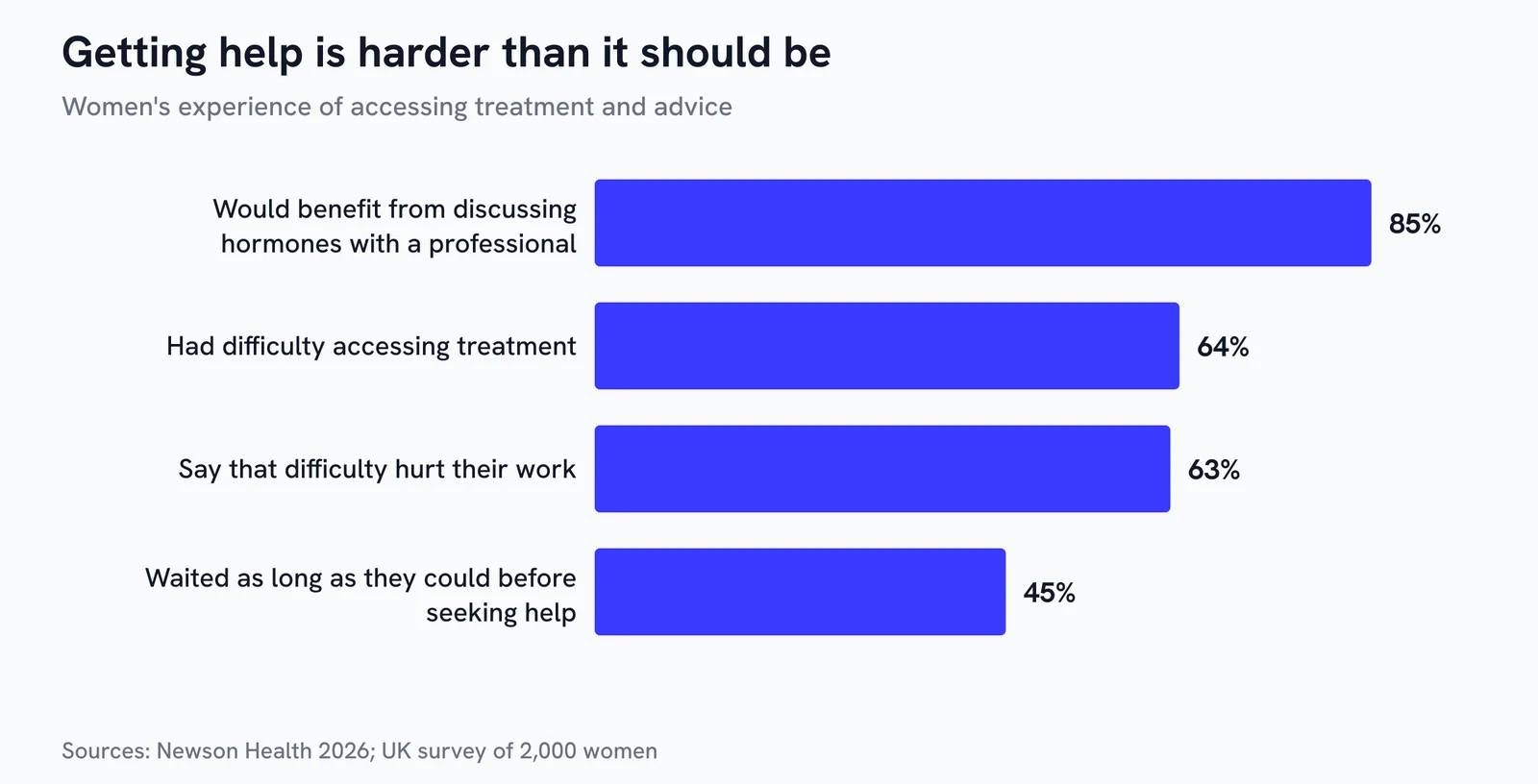
If that sounds like hard work, it is, and you are not imagining it. Most women want the conversation and far fewer manage to get it.
If exhaustion and fog are the loudest part for you, we go deeper on that in perimenopause fatigue and brain fog at work.
As mentioned previously, this is a time when many women begin to feel a pull.
Maybe it’s a career pivot. A creative urge. A deep need for space, stillness, or a change in your relationships.
Listen to that voice.
As Hill writes, “This phase of life can be a portal to clarity. It demands that you take up space and honour your needs. That you drop the mask of perfection and get real.”
“Get real”. What would that look like for you?
Start with the two levers that need no appointment: protect your sleep, and move your body most days. Both improve mood measurably, and both are the first things to go when you feel awful.
Then get assessed properly. HRT, cognitive behavioural therapy and, for some women, an antidepressant are all legitimate treatment options, and choosing between them is a conversation for your GP.
Clinically it is usually described as early and late perimenopause, then menopause itself (twelve months with no period), then postmenopausal life.
The four-stage version you will see online splits the early phase in two. What matters more than the labels is that symptoms of the menopause often begin years before your periods stop.
Yes. You do not have to wait until your periods have stopped, and many women are prescribed it while still cycling.
Whether it suits you depends on your history and your symptoms, so it is a discussion with a clinician rather than a decision to make from an article.
Because irritability and rage are genuine mood symptoms of falling oestrogen, not a personality defect. Broken sleep lowers your threshold even further.
And sometimes, honestly, the anger is information. Plenty of women find it is pointing at something in their life that needed to change years ago.
At EmpowerHer, we believe that every woman deserves to understand her body, her hormones and her power. This is not something to hide. It’s something to embrace, with community, courage and compassion.
So, if you’re feeling a little lost right now, know this:
You’re not alone. You’re not broken. You’re definitely not done.
Though you may be a little tired, and a little ‘done’ with some things in your life.
This is your time. Perimenopause is your portal, and we’re right here with you.
Please get in touch if you would like any further information about our services, or come and see how group coaching works.
With best wishes, Amy xx