
Perimenopause Rage: Why It Happens and What Helps
Perimenopause rage is real, and it is not who you…


A woman sat in one of our sessions recently and said, almost as an aside, “I think I’ve just been managing myself for twenty years.”
She had come to talk about a promotion she wasn’t going for. Within forty minutes we were nowhere near the promotion, and exactly where we needed to be.
That is the difference between being given advice and being properly coached. One tidies the surface. The other goes after the thing underneath that keeps producing the surface.
This is transformational coaching, and it is the way of working we have built EmpowerHer on.

Most coaching helps you do a thing better. Transformational coaching changes the person doing the thing.
Traditional coaching is often transactional: you arrive with a goal, the coach helps you build a plan, and you leave with actions. That has real value, and plenty of days call for exactly that.
A transformational coach works one level down. The focus is the beliefs, assumptions and identity driving the behaviour, because that is where lasting change comes from.
Here is the distinction we use with clients:
| Traditional or transactional coaching | Transformational coaching | |
|---|---|---|
| The question | What will you do? | Who do you need to be? |
| Where it works | Goals, plans, performance | Beliefs, identity, self-trust |
| What you leave with | An action list | A different relationship with yourself |
| Pace | Fast and satisfying | Slower and more uncomfortable |
| What it changes | The behaviour | The pattern producing the behaviour |
| Best when | You know who you are and need a plan | You keep setting the same goal and not moving |
Both are legitimate. This type of coaching simply asks a different question. Not what will you do? but who do you need to be, and what is in the way?
The transformational level is where personal transformation happens, and it is slower, more uncomfortable and considerably more durable than a plan you abandon in a fortnight.
Because the women we work with do not have a productivity problem. They have a confidence problem that everyone, including them, has mistaken for a competence problem.
During peri/menopause, confidence is usually the first thing to fracture. Focus wobbles, sleep goes, and the inner voice gets considerably louder. Give that woman a time-management framework and you have solved nothing. It is the same pattern we describe in perimenopause fatigue and brain fog at work.
A transformational coaching practice starts somewhere else. It starts with self-awareness: noticing the story you are telling yourself, testing whether it is true, and choosing what happens next. That is the same engine behind confidence coaching for women.
Both of us are trained through the International Coach Federation. Jo is an ICF Professional Certified Coach specialising in coaching in organisations and peri/menopause transition. Amy is an ICF-accredited transformative coach and ADHD specialist. That accreditation matters, because the credibility of the coaching rests on the training behind it and on continuing to be supervised.
We blend that with neuroscience and creative practice, which is the part people remember. Understanding why your brain is doing this is what stops you treating it as a character flaw.
Every coaching engagement is different, because every woman is. But the shape of a session is fairly consistent:
The role of the coach here is not to have the answers. It is to ask the question you have been carefully steering around, and then stay quiet long enough for you to answer it.

That coaching dialogue is the whole method. The coach and the client are doing the work together, and a good coaching relationship makes it safe to be honest rather than impressive.

This is where it stops being a personal development perk and starts being a retention strategy.
UK businesses lose around £10 billion every year to absenteeism and lost talent connected to peri/menopause, and one in four women consider leaving work because of it. Not because the work became too hard, but because their confidence went and nobody named what was happening.

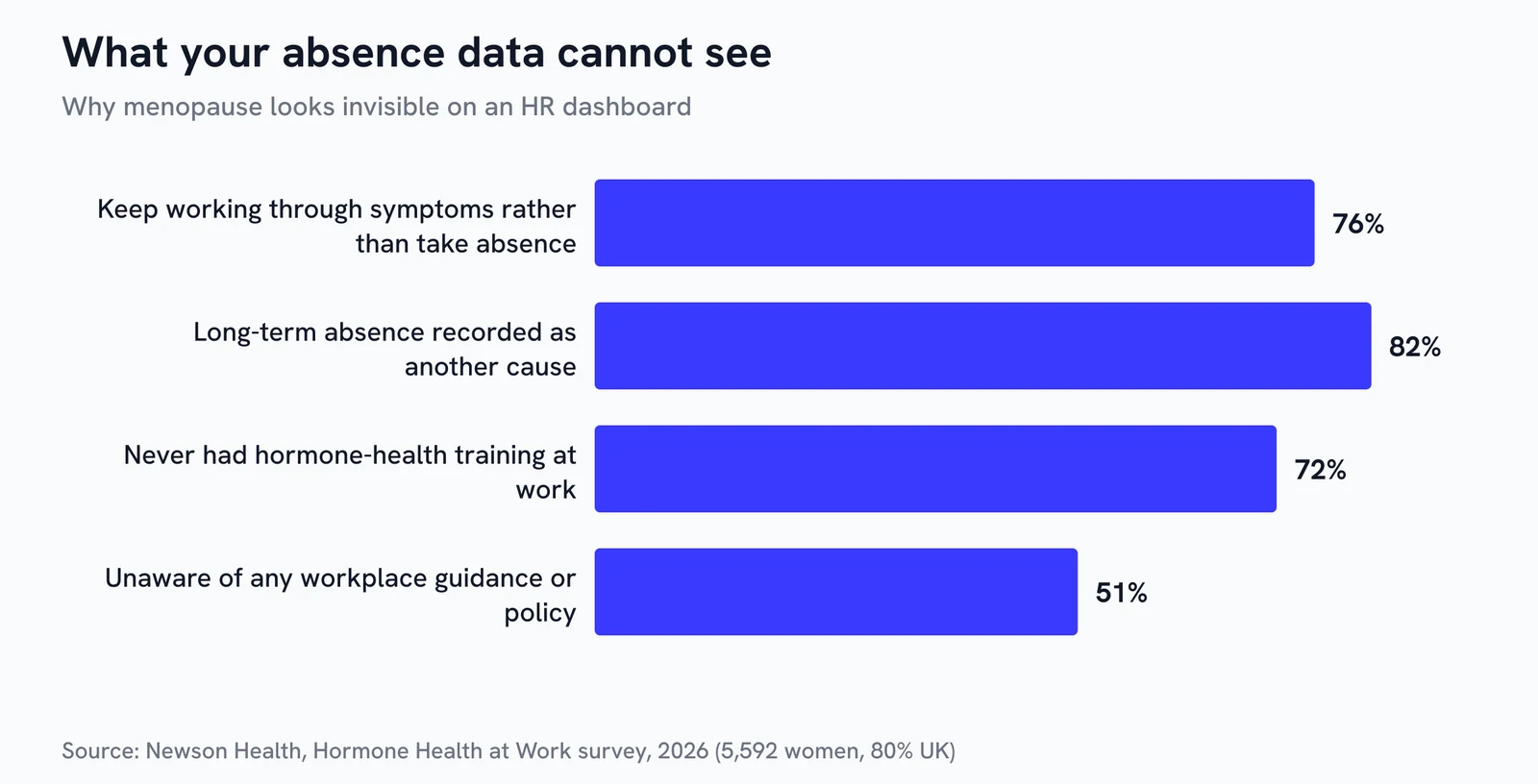
Policies raise awareness. They do not rebuild self-belief. When an organisation invests in coaching at the transformational level, what changes is the woman’s relationship with her own capability, and that is what keeps her in the room.
What we see in practice:
Our Confidence Gym programme is built for exactly this, and comes with The Brilliance Blueprint workbook so the learning survives past the last session.
Our co-founder wrote about what this looked like in her own life, in the framework that rebuilt her confidence.
Therapy tends to look back and heal what is unresolved. Coaching looks forward at what is possible. They are complementary, and plenty of women do both.
A good professional coach will tell you plainly when what you need is a therapist. We do, regularly. Being able to say that is part of the job.
It is a way of working that targets beliefs and identity rather than tasks and tactics. Expect open questions, silence you are allowed to fill, and homework that is about noticing rather than doing.
The coach holds the space and the structure. You supply the honesty. Nothing shifts without that second part.
Transactional coaching solves the problem in front of you. Transformational coaching changes the pattern that keeps producing those problems.
If you have set the same goal three years running, you do not have a planning problem. That is the point at which a different coaching approach earns its keep.
Train properly with an accredited coach training programme, ideally one recognised by the International Coach Federation, then log supervised hours. Becoming a coach is a learning journey rather than a certificate you collect.
The part no coaching certification can give you is your own work. The coaches we trust have sat in the client chair and found it uncomfortable.
It varies hugely by country, format and experience, and any single figure you see quoted online is close to meaningless.
If you are considering this as a career, look at the coaching practice you want to build rather than the salary, because the two are only loosely related in the early years.
If you recognised yourself in that opening line, you are not broken and you are not behind. You have just been managing yourself for a long time without anybody asking better questions.
Ready to try it? Come and see how group coaching works, or book a discovery call to talk about your organisation.
Because brilliance never pauses.